
What is Growth?
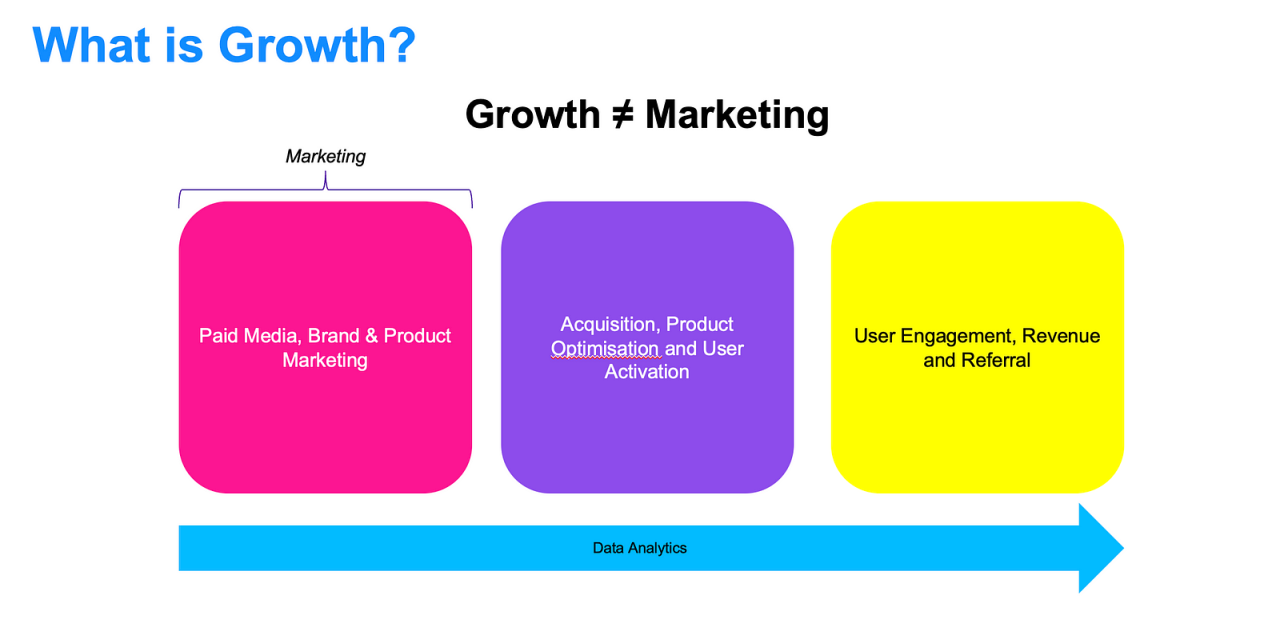
And how Growth ≠ Marketing
It’s no secret that marketing salaries are generally lower than product or engineering positions of similar seniority.
This is because the skills a marketer needs are perceived as being more accessible and widely available than engineering.
Many leaders just don’t understand what good marketing is. They think marketing is:
- Writing emails
- Working with paid media agencies
- Posting on socials
And it’s true that this is all a lot of marketing managers living in a silo do.
But marketing cannot be a standalone function in the business.
⁉️ Growth Marketing is not a role–it’s a way of thinking. (For more on this, read Hacking Growth by Sean Ellis)
This is Sparta!

Recently I started working as senior growth marketer at Stakemate, and after years of working in a growth-focused agency where everyone knew what growth was, I found myself needing to explain it.
I realised that little work has been done on clearly defining growth marketing, so I came up with a model, and tried to find a suitable acronym.
I present to you, SPARTA: Strategy, Product, Acquisition, Retention, Testing, Analytics.
Disclaimer: This isn’t a complete model, I’ve definitely missed some points, and am wildly wrong on others. But it should serve as a good guide to the uninitiated. If you’ve been doing growth marketing for 10 years, please forgive my transgressions.
1. Strategy
The high-level thinking stuff that isn’t immediately actionable, needs some long walks, coffee chats, workshops, and endless Miro boards.

In larger organisations, growth marketers will not own this function for the whole business, but they still need to define and chisel the Go-To-Market Strategy for whatever part of the product they own. This includes:
- Messaging, target market and value proposition design
- Creative direction and branding (creativity is one of the most important traits of a good growth marketer)
- Channel mix
- Goal and KPI setting
- Awareness (first appearance of the pirate metrics)
2. Product
People often forget that product is one of the most important of the 7 P’s of marketing. Mark Ritson–the king of mini MBA’s–recently wrote about this extensively, so I’ll save you the sermon.

Suffice it to say that the lines between growth and product management can sometimes become blurred. In short, a Growth Marketer needs to be involved with, or even directly own:
- User surveys, interviews and product testing
- Feature definition and product roadmap
- Onboarding and user experience optimisation
(You’ll also note how the word ‘product’ will appear again in the sections below.)
3. Acquisition
This is where growth becomes more familiar to people who think of it as = marketing.

Acquisition includes:
- Developing and running direct response paid campaigns across multiple channels (the kind of ads that say “click here now”).
- Conversion Rate Optimisation (CRO) on landing pages and product flows (read more here).
- Onboarding activities through CRM which push users to the key activation / “Aha!” moment.
4. Retention, Revenue, Referral
I’ve put the rest of the pirate metrics into one R for the sake of Sparta. Some might disagree, but activities in these 3 stages are fairly similar, and include:
- Product optimisation
- Retargeting campaigns on paid media
- Strong, data-led CRM campaigns
- Conversion Rate Optimisation on checkout flows
5. Testing
Growth is all about testing. A/B testing on ad creatives, media buying tests, multivariate testing on landing pages, testing new flows on the product, and testing new value proposition and messaging.

A rigid understanding of scientific experimentation and hypothesis development is a must in any growth role.
6. Analytics & Data
This is probably the most overlooked part of a growth marketer’s role. Most growth marketers will have a background in marketing, branding or copywriting. Some may have graduated from humanities degrees such as history or politics.
The best ones however will have backgrounds in data analytics or data science.
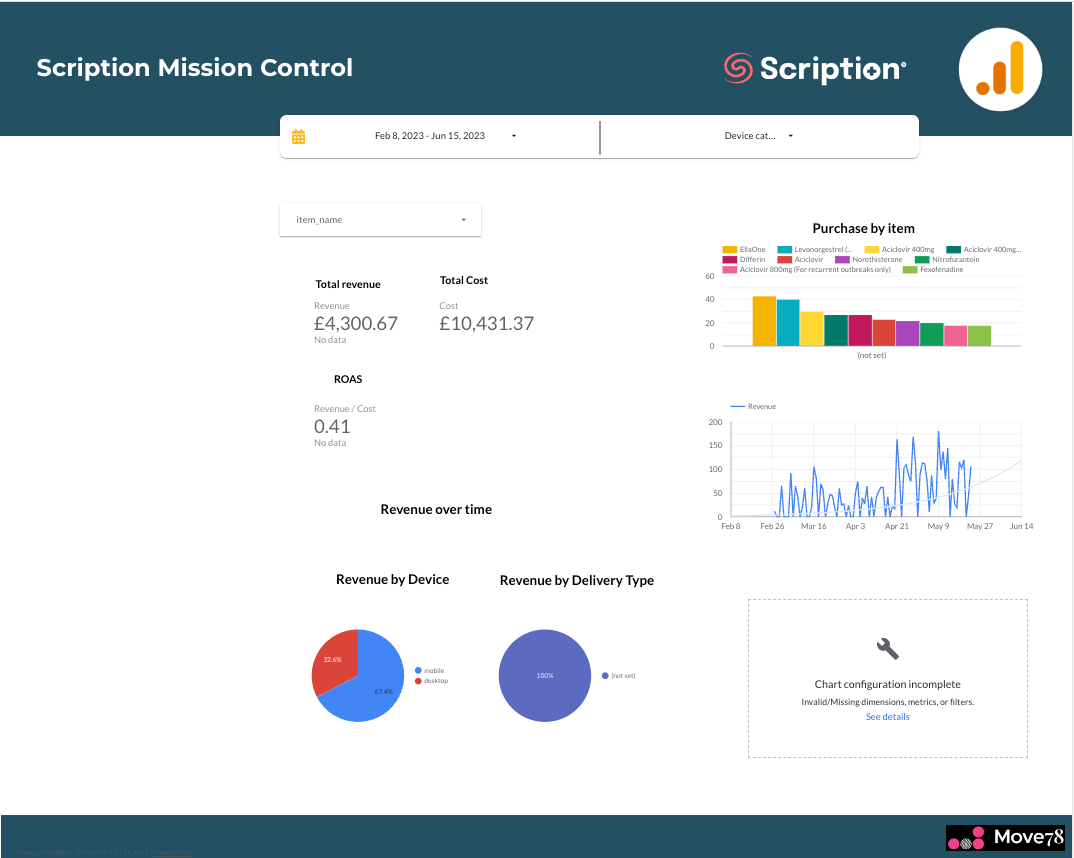
The data-related activities a growth marketer needs to do include:
- Developing event maps and data collection strategies
- Implementing tagging and tracking via Google Tag Manager
- Understanding and setting up server-side tagging solutions
- Building and maintaining BI dashboards using platforms such as Mixpanel or Tableau
- Conducting deep-dive analysis of data, including developing regression or similar models, or solving hard classification problems (sometimes even acting as a quant)
Conclusions
In short, growth is definitely not marketing. An A-Team growth marketing manager will have a solid understanding of all of the parts of the SPARTA model above, as well as a grasp of developing full-funnel strategies using the pirate metrics framework.

A background in, or deep understanding of data analytics, big data management and data management is also an absolute must-have, and so are creativity and project management skills.
I hope this was helpful. If you’re wondering what skills a growth marketer needs to have and how to hire for this role, I will be following this up with another blog, so subscribe and stay tuned!


